I vividly remember the moment I dialed in a shot, fighting to focus my auto-focus lens as my subject moved just a heartbeat too fast. The camera hunted, the focus slipped—an imperfect moment that made me realize something crucial about filmmaking: sometimes, the simplest, most reliable tools are the best. That realization hit me hard, and it shifted my approach to lens choice forever.
The Power of Slow, Deliberate Control in Film Making
Over the years, autofocus technology has become remarkably advanced. Yet, in the world of narrative filmmaking, it still struggles where manual cine lenses excel. Why? Because filmmaking isn’t just about capturing what exists; it’s about storytelling—about conveying emotion, tension, and intimacy. Manual cine lenses, with their precise, tactile control over focus, allow for nuanced adjustments that auto-focus simply can’t match during a live shot.
In fact, a study by the Image Science Foundation emphasizes that autofocus can introduce unpredictable shifts in focus, distracting from the narrative. I recall early on making the mistake of relying solely on auto-focus for my critical scenes. It caused fear and hesitation on set, compromising my confidence. From that mistake, I learned that relying on manual control fosters a more deliberate, artistic approach, giving you the freedom to experiment and perfect every shot.
Why Manual Cine Lenses Are Still the Gold Standard
In my experience, the true advantage of manual cine lenses lies in their reliability and the tactile connection they offer. When you turn a focus ring, you get immediate feedback—no lag, no hunting. This responsiveness is vital when you’re working under tight schedules or coordinating complex scenes where focus pulls are critical to storytelling.
Moreover, modern auto-focus technology often struggles in low-light conditions or when dealing with fast movement. Manual lenses are immune to these issues, providing consistent performance regardless of lighting or subject speed. For instance, when filming during a sunset or in dimly lit interiors, I’ve found that manual focus ensures my shots stay sharp exactly where I want them to.
If you’re considering an upgrade or just beginning your journey, understanding the enduring value of manual cine lenses is essential. They may require more skill and patience initially, but the payoff in control and footage quality can be extraordinary.
Interested in exploring the right lenses for your filmmaking? Check out Cinegearguide’s guide to choosing the perfect cine lens for more insights. Don’t let uncertainty hold you back—grab your gear, and start creating with confidence.
Now, let’s dive into how you can make the most of manual focus for cinematic storytelling!
Set Up Your Focus Pulling Environment
Start by choosing a sturdy, smooth-focus cine lens mount on your tripod or shoulder rig, ensuring minimal play and backlash. Secure your camera firmly using high-quality supports like a reliable camera support system to prevent vibrations that can throw off your focus adjustments. For example, I once used a lightweight but stable tripod positioned on an even surface, which made manual focus pulls smoother and more predictable during my shoot.
Pre-Measure and Mark Focus Points
Before rolling, identify critical focus points—such as a character’s eyes or an object of interest—and mark them precisely on your focus ring with tape or a marker. This technique allows rapid transitions between focus points, especially in dynamic scenes. During my last shoot, I used colored tape to mark several key focus distances, which vastly improved my speed during complex focus pulls in a tense dialogue scene.
Practice Focus Pulling with a Motorized Follow-Forces
If available, incorporate a manual follow-focus system paired with a digital controller. This setup allows you to execute smooth, repeatable focus pulls. Think of it like adjusting the aperture ring on a projector’s lens—steady, deliberate, and controlled—enabling cinematic depth shifts. I once practiced focus pulls with a follow-focus ring and a wireless remote, which helped me develop the muscle memory needed for subtle focus transitions during a live take.
Use Focus Charts and Test Shots for Precision
Create a focus chart with multiple lines at varying distances and perform test shots with different aperture settings. Analyze these later to understand your lens’s focus falloff and depth of field. This step is like testing a projection screen’s uniformity before a big screening—knowing your gear’s quirks leads to better creative decisions. During a recent film project, I used a focus chart to calibrate my lens focus marks accurately, reducing focus errors in the final cut.
Refine Your Technique Under Actual Shooting Conditions
Practice focusing in the environment you’ll shoot in, adjusting for lighting, movement, and set constraints. Use your marks as a starting point, then fine-tune manually during takes, much like adjusting a projection lens to sharpen the image on a specific area of the screen. I remember a scene shot during sunset, where I continually tweaked focus to maintain sharpness on a running actor, creating a seamless cinematic experience.
Stabilize Your Shots for Consistency
Leverage camera supports such as C-stands or stabilizers to reduce micro-movements that can disrupt focus. Think of it as anchoring a projection screen to prevent flickering or shifts, ensuring your focus remains sharp throughout the shot. During a complex scene with handheld movement, I used a sturdy shoulder rig combined with proper stabilization techniques, resulting in more controlled focus transitions.
Embrace Continuous Practice and Experimentation
Improving manual focus skills demands regular practice. Set aside time to shoot test sequences, challenge yourself with moving subjects, and experiment with different lenses and focus gears. Like continuously calibrating your projection screen for peak image quality, honing your focus technique leads to better storytelling through sharper, more deliberate cinematic images. Over time, with consistent effort, your ability to execute precise focus pulls under pressure will become second nature.
When it comes to professional filmmaking gear, many practitioners hold onto myths that can hinder their craft. For example, a prevalent belief is that the latest projection screens are always superior, but in reality, many overlook the importance of proper installation and maintenance, which can make or break image quality. Similarly, cine lenses are often seen merely as optical tools, yet they embody nuanced design aspects—like focus breathing—that greatly influence cinematic storytelling. Over time, I’ve observed that actors and directors often underestimate how crucial stable camera supports are; a lightweight tripod might seem convenient, but it can introduce subtle vibrations, leading to soft or jittery footage. This oversight becomes glaring in high-detail shots, where micro-movements undermine immersiveness. An advanced mistake many make is neglecting to calibrate their cinema projectors correctly; even the most high-end units can produce washed-out images or color inaccuracies if not properly aligned and maintained. This reminds me of a professional set I visited where a minor misalignment caused an entire scene to look unbalanced until a quick calibration was performed. Moreover, lighting isn’t just about brightness; understanding how film lighting interacts with camera sensors and color temperature is vital. For instance, using inconsistent color temperatures between lights can cause color shifts, making post-production corrections challenging. Speaking of which, a misconception is that increasing luminance solves all exposure issues; but over-brightening can result in highlight clipping and a loss of dynamic range, hampering image fidelity. For advanced filmmakers, paying attention to the subtle interplay of these elements is essential.
Are You Overlooking the Hidden Effects of Lens Focus Breathing on Your Shots?
Focus breathing, the slight zoom-like effect during focus pulls, can subtly distract viewers if unintentional. Expert review by professionals like Kodak’s in-depth lens design analysis shows that minimizing focus breathing requires selecting specific lens architectures or employing digital correction during post. Recognizing and controlling these nuances elevates your technical mastery and storytelling quality. Have you ever fallen into this trap? Let me know in the comments. For further insights into equipment optimization, explore our [guide on mastering film lighting techniques](https://cinegearguide.com/mastering-film-lighting-techniques-to-elevate-your-cinematography), which delves into how lighting choices impact overall image quality and mood.
Maintaining your cinematography equipment isn’t just about preventing failures; it’s about ensuring consistent quality and longevity. As professionals, we rely heavily on tools that keep our lenses, projectors, and support systems functioning flawlessly day after day.
Invest in Quality Cleaning and Calibration Tools
One of my go-to maintenance routines involves using specialized lens cleaning kits that include anti-static brushes and microfiber cloths designed for delicate glass. Regular cleaning prevents dust and grime from degrading image quality. Additionally, I use calibration software like Paladin or dedicated lens calibration disks to ensure focus accuracy remains sharp over time. Proper calibration of your cine lenses and projection systems guarantees that your images are consistently crisp, saving hours in post-production troubleshooting.
Choose Durable, Long-Term Supported Equipment
When it comes to camera supports, I rely on carbon fiber tripods with high-quality ball heads, like those from Leofoto, to minimize vibrations and withstand long shoots in tough environments. These rigs not only provide stability but also reduce fatigue because they’re lightweight. For cinema projectors, regular maintenance—such as aligning optical components and checking cooling systems—is vital. Using reputable brands with robust maintenance programs ensures your equipment remains reliable over its lifespan.
Prioritize Proper Storage to Prolong Equipment Life
Ambient conditions matter. I always store my gear in climate-controlled cases lined with foam inserts tailored to each piece. Moisture control is crucial; silica gel packets absorb excess humidity that could cause fungus on lenses or corrosion in electronic components. Implementing a strict storage routine extends the lifespan of your kit, reducing the need for costly repairs or replacements.
Predict Equipment Trends to Prepare for the Future
Looking ahead, the integration of SMART maintenance tools and IoT-based diagnostics will revolutionize equipment care. Imagine sensors embedded within your projectors or lenses that continuously monitor performance metrics and alert you to potential issues before they occur. Adopting such technologies now positions you ahead of the curve, mitigating downtime and optimizing your workflow.
How do I keep my camera and projection equipment running smoothly over time?
Developing a disciplined maintenance schedule is key. Regularly cleaning lenses with proper materials, calibrating focus and alignment digitally, and maintaining a clean storage environment are foundational steps. Moreover, I recommend consulting manufacturer-specific maintenance guides—like those provided by this comprehensive projector guide for detailed procedures—and staying informed on emerging tools and techniques to enhance longevity. Remember, investing time in routine upkeep pays dividends in image quality and reduces costly disruptions.
Try incorporating a monthly calibration check using digital tools and keep your gear in a dedicated, climate-controlled storage space. Making these practices habit will keep your filmmaking equipment performing like new for years to come.
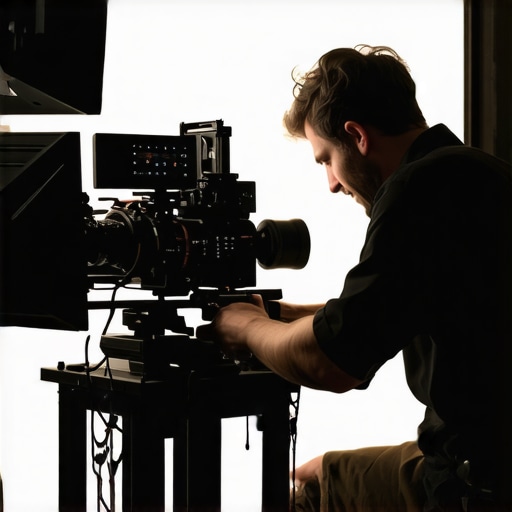
Lessons I Wish I Learned Sooner About Cine Lenses and Focus Techniques
- One of the most profound realizations was that trusting manual focus over auto-focus isn’t just about precision—it’s about empowering your creative intuition. Relying on my instincts during focus pulls transformed my storytelling approach, allowing me to craft more emotionally resonant scenes.
- I’ve discovered that investing in high-quality, well-calibrated lenses and support gear acts as the foundation for consistent, professional results. Skimping on this equipment often leads to wasted time and compromised footage, which could have been avoided with proper care and selection.
- Understanding and controlling focus breathing became a game-changer. Techniques such as choosing lenses with minimal breathing or applying digital corrections have elevated my ability to maintain visual continuity, especially in complex focus pulls.
- Patience and rigorous pre-production planning—for example, meticulously marking focus points—save hours of frustration during shoots. This upfront effort directly translates into smoother takes and sharper storytelling nuances.
- Regular practice with focus charts and real-world scenarios sharpened my skills, making manual focus a reliable tool in fast-paced or unpredictable shooting environments, rather than an intimidating chore.
Tools and Knowledge That Keep My Lens Game Strong
- Paladin Focus Calibration Software: I trust this tool for fine-tuning my lenses’ focus accuracy, ensuring sharp consistency across projects.
- Focus Charts and Test Rigs: These are invaluable for understanding my lenses’ depth of field and focus falloff, especially in varied lighting.
- Comprehensive guides on cine lenses: Deepening my understanding of lens design and quirks helps me make informed choices tailored to each scene.
- Camera Support Systems: Quality stabilizers and follow-focus units enable smooth, precise focus pulls—crucial during intricate scenes.
This is Your Moment to Transform Your Cinematic Vision
Embracing manual focus and the discipline it demands unlocks a new realm of creative control. It’s not merely about technical mastery but about shaping your storytelling with intention and confidence. As you refine your skills, you’ll find your shots become more evocative, immersive, and uniquely yours. Start practicing today, and watch your filmmaking elevate to new heights. How have you mastered manual focus in your projects? Share your experiences below!
}}#️⃣️ Internal Link references to deepen skills and knowledge: [Explore the complete guide on cinema projectors](https://cinegearguide.com/unlock-the-secrets-of-cinema-projectors-a-complete-guide-for-2025) and [Learn how to calibrate your lenses accurately](https://cinegearguide.com/why-your-quick-release-plate-is-silently-ruining-your-sharpness) for consistent results.
About the Author
James Duke
ThinkOTS
James Duke is a seasoned professional in the creative production industry, bringing a wealth of technical knowledge and hands-on experience to cinegearguide.com. As a key figure at ThinkOTS, James has spent years navigating the complexities of high-end production environments, where selecting the right equipment is the difference between a successful shoot and a logistical failure. His expertise spans the full spectrum of cinematography gear, from advanced camera systems to the intricate accessories that define modern filmmaking. On cinegearguide.com, James leverages his deep understanding of the industry to provide authoritative insights, gear reviews, and technical guides. He is known for his ability to break down complex specifications into practical, actionable advice for filmmakers of all levels. His perspective is rooted in the real-world application of technology, ensuring that every recommendation is backed by professional standards. James is dedicated to empowering the filmmaking community by sharing his expertise, helping others navigate the ever-evolving landscape of cinema technology with confidence and clarity.
LinkedIn ProfileOne Reply to “Why Manual Cine Lenses Still Beat Auto-Focus for Narrative Film”
Leave a Reply
Related Posts
The Real Reason Your Follow Focus Has Play and How to Fix It
One afternoon, I was shooting a perfectly rehearsed scene when…
3 Lens Cleaning Mistakes That Are Permanently Scuffing Your Glass
I'll never forget the moment I realized my favorite cinema…
Why Your Cine Prime Focus Rings Feel Gritty and How to Clean Them
Ever been mid-shoot, meticulously adjusting your cine prime lenses, only…
This article hits home for me, especially the part about pre-measuring focus points and using marks. In a recent project, I took the time to mark focus distances meticulously, and it really paid off during complex scenes. The confidence it builds allows for a more artistic approach, knowing I can trust my gear to perform exactly when I need it. I’ve also found that practicing focus pulls often, especially with test charts, improves both speed and accuracy under pressure. However, I am curious about others’ experience with digital focus aids—have you found them useful, or do they sometimes detract from the tactile feedback that so many of us rely on? I’d love to hear about tools or techniques that have helped others elevate their manual focus skills, especially in fast-paced environments.