
Ever been behind the camera, ready to roll, only to realize your shot’s glare or reflections are ruining the scene? I remember my first frustrating attempt at shooting an outdoor interview, where harsh sunlight bounced off reflective surfaces, turning my carefully lit scene into a washed-out mess. That was the lightbulb moment that made me dig into polarizers—those tiny filters that promise to tame unwanted reflections and improve contrast. But here’s the catch: not all polarizers are created equal.
Why Choosing the Right Polarizer Matters for Your Cinematography
In the world of professional cinema, the difference between a good shot and a great one can boil down to subtle details—and filter choices are often overlooked. I used to think any polarizer would do, until I faced the reality that using the wrong type could sometimes make things worse, not better. This realization motivated me to understand the nuances between the options: linear and circular polarizers. Today, I want to help you avoid my early mistakes and make informed decisions that elevate your work.
Are You Falling for the Hype Without Getting Results?
It’s easy to get overwhelmed by marketing claims, especially when dedicated camera gear suppliers tout their latest polarizers as essential for every shot. Early in my career, I bought a cheap linear polarizer, convinced it would fix my issues, only to find it introduced problems with autofocus and metering. That mistake taught me a valuable lesson: understanding the fundamental differences can save you time, money, and headaches on set. For example, did you know that using a linear polarizer can actually interfere with your camera’s autofocus system? According to industry experts, circular polarizers are generally more camera-friendly, especially for modern digital systems.
So, what exactly sets these polarizers apart, and which one suits your shooting style best? That’s what we’re about to explore. By the end of this guide, you’ll know how to choose the right filter to complement your lenses and lighting setups, ensuring your cine footage looks sharp, vibrant, and free of distracting reflections. Ready to level up your filter game? Let’s dive in.
If you’ve ever struggled with glare or reflections ruining your shot, you’re not alone. Many filmmakers face this challenge daily, and selecting the proper polarizer can make a tangible difference. Curious if you’ve been using the wrong type all along? Keep reading, and I’ll walk you through everything you need to know.
Choosing the Right Polarizer: A Step-by-Step Approach
In my early days of filmmaking, I once grabbed the first circular polarizer I found and slapped it onto my lens before a sunny outdoor shoot. The result? Better control over reflections, but also unexpected color shifts and exposure issues. That messy experiment taught me a crucial lesson: the process of selecting a polarizer isn’t just about buying the most expensive or popular model—it’s about matching its characteristics to your specific needs. Here’s how you can systematically choose the perfect polarizer for your cinematography projects.
Assess Your Camera and Lens Compatibility
Start by understanding your camera’s autofocus and metering systems. Circular polarizers are generally camera-friendly, especially with modern digital cameras that rely on electronic autofocus. If you’re using a mirrorless or DSLR camera, opt for circular to prevent interference. I learned this during a documentary shoot where my linear polarizer disrupted autofocus, forcing me to redo shots—costly in time and effort. To avoid this, always verify your lens mount compatibility with the polarizer type specified by the manufacturer.
Determine Material and Quality Priorities
The quality of polarizer filters varies. High-end options often feature multi-coated glass for reduced reflections and increased durability. During a recent all-day shoot, I upgraded to a premium circular polarizer, which significantly minimized lens flare and color saturation issues. When choosing, prioritize filters with multi-coating to ensure longevity and premium image quality, especially if you shoot in challenging lighting conditions.
Match the Polarizer Strength to Your Lighting Conditions
Polarizer strength is usually adjustable by rotating the filter, allowing control over the degree of reflection suppression. In a bright outdoor scene, I used a high-intensity polarizer to tame harsh reflections but kept the rotation minimal to maintain natural colors. Practice rotating your filter to see how the effect varies; this hands-on approach ensures you get the desired effect without over-darkening the scene. Remember, the goal isn’t to eliminate reflections entirely but to balance aesthetics and realism.
Test and Adjust Before Shooting
Testing is critical. I once spent hours on location trying to replicate the perfect shot I envisioned, only to realize my polarizer’s angle was off. Always set up your camera and lens system in similar lighting conditions beforehand. Rotate the polarizer while observing your image feed or through the viewfinder to identify the optimal position. This proactive step prevents surprises during critical moments and ensures consistent results.
Integrate with Your Support Equipment
Using camera supports like rigs and stabilizers can complicate filter handling. When I mounted my camera on a gimbal, I found that the polarizer needed fine-tuning after each movement. To streamline this, use a lightweight filter holder system that allows easy rotation and quick adjustments. Also, consider the size and thread compatibility of your polarizer to ensure seamless integration with your lenses and supports, such as camera supports.
By following these precise steps—assessing compatibility, prioritizing quality, adjusting strength appropriately, testing thoroughly, and considering your gear’s support system—you can confidently select the ideal polarizer for your cinematic needs. Remember, deliberate choice and practice save you time and elevate your footage from good to professional-grade.
Many filmmakers and projectionists operate under common assumptions about cine lenses, cinema projectors, film lighting, projection screens, and camera supports—yet these beliefs can often lead to costly mistakes or missed opportunities. Let’s dive into some of the nuanced misconceptions that even seasoned professionals might overlook, revealing how a deeper understanding can elevate your craft. First, don’t assume all cine lenses are created equal. While marketing often touts their superior optics, many believe that vintage or less expensive lenses are inherently inferior. In reality, some older cine glass, when properly maintained, can impart a unique character that modern lenses struggle to replicate. This myth can cause filmmakers to overlook vintage lenses, missing out on their distinctive aesthetic qualities that modern technology can’t easily duplicate. For supporting this viewpoint, industry expert CineGear’s lens guide emphasizes the value of understanding lens character over mere sharpness.
Next, the misconception that cinema projectors are solely about resolution—many overlook the significance of light source quality and optical coatings, which critically influence contrast, color fidelity, and overall image depth. Thinking higher lumen output automatically translates to better image quality is a trap. Instead, it’s about how the projector’s components manage light, avoiding issues like hot spotting or washed-out whites, especially in well-lit rooms. A detailed study from the Projector Guide 2025 points out that contrast ratios and color calibration are often more impactful than raw brightness.
When it comes to film lighting, many believe that high-output fixtures are always preferable. However, over-lighting or using unbalanced lighting setups can lead to loss of mood and depth. The nuance lies in how you shape and control your light, employing modifiers and accurate color temperatures. Mastering these skills ensures your lighting enhances narrative rather than overwhelms it. For practical insights on this topic, check out Mastering Film Lighting Techniques.
Projection screens are often considered just as a surface, but many fall for the misconception that higher gain screens always improve brightness and contrast. In truth, high-gain screens can create hotspots and viewing angle issues, especially in wider seating arrangements. The Screen Guide details how selecting the appropriate screen gain based on room setup is crucial to achieving uniform image quality.
Lastly, misconceptions about camera supports can be surprisingly costly. Many believe that lighter support systems are inherently better for mobility. However, inadequate support can introduce vibrations or instability, especially during complex moves. The secret is understanding the proper support system for your specific gear and shot requirements, integrating counterweights and damping mechanisms to ensure steadiness. Proper rigging isn’t just about convenience—it’s fundamental to professional-looking footage.
Have you ever fallen into this trap? Let me know in the comments! Recognizing and challenging these hidden assumptions can unlock hidden potential in your cinematic toolkit, leading to sharper images, smoother camera movements, and more immersive storytelling.
Keep Your Gear Running Smoothly: Tools and Maintenance Strategies
In the demanding world of professional cinematography, relying solely on top-notch equipment isn’t enough. Implementing a well-thought-out maintenance routine and leveraging the right tools can prolong the life of your cine lenses, projectors, and support systems, ensuring consistent quality and reliability over time. One of my go-to tools for maintaining camera supports is a high-quality support system tension meter. This device allows me to precisely adjust and verify the stability of my support rigs, preventing costly vibrations or shifts during shoots. Additionally, regular cleaning of vintage cine glass with specialized cleaning kits—like those recommended in this guide—helps preserve coatings and image clarity, especially when working with delicate glass elements.
How do I maintain my cinema projectors over time?
Routine maintenance is crucial to prevent heat buildup, dust accumulation, and mechanical wear. I use compressed air blowers to clear dust from cooling vents and optical pathways, and I schedule filter replacements annually to avoid image degradation. According to industry standards outlined in the 2025 Cinema Projector Maintenance Guide, consistent filter changes and lubrication of moving parts are essential. Predictive maintenance—using sensors to monitor temperature and vibration levels—might seem advanced, but it’s becoming a game-changer for large setups. Predictive analytics can catch potential issues early, saving both time and money and ensuring your projector operates at peak performance for years to come.
Recommended tools for longevity and scaling your setup
As you scale your cinema setup, investing in quality tools becomes increasingly important. A digital level helps maintain perfect alignment of projection surfaces and lenses, preventing image distortion. For ongoing calibration, I employ a colorimeter like the X-Rite i1Display Pro, which ensures color fidelity across your display and projection devices. With the proliferation of LED and laser projectors, consistent calibration is vital to maintain color accuracy over time. Keep in mind that environmental controls—such as humidity and temperature regulation—also play a vital role in preventing damage and extending equipment lifespan. To make your maintenance practices more effective, I recommend scheduling detailed inspection routines quarterly, including checking for loose mounts, worn belts, or leaking seals, especially in vintage systems.
Looking ahead, AI-driven predictive maintenance tools will likely become standard, allowing technicians to forecast failures before they happen. This shift will not only enhance reliability but also streamline operations, saving costs and effort in the long run. Embrace these technologies now by integrating sensors and data analysis into your setup, and you’ll stay ahead of issues before they impact your productions.
Finally, don’t underestimate the importance of documentation. Maintain detailed logs of maintenance activities, calibration settings, and equipment upgrades. This practice helps identify patterns, optimize routines, and prolong the usability of your camera supports, lenses, projectors, and lighting systems. Remember, a little consistent effort goes a long way toward ensuring your cinematic equipment remains dependable and performs at its best for every shoot and screening.
Start implementing a dedicated maintenance routine today—your future self will thank you when your setup reliably delivers pristine images, scene after scene. Want to explore more advanced methods? Check out this article about stabilizer maintenance or consider investing in predictive tools for your projection systems. Maintaining your gear isn’t just about upkeep; it’s a strategic move toward scalable, professional-grade filmmaking.
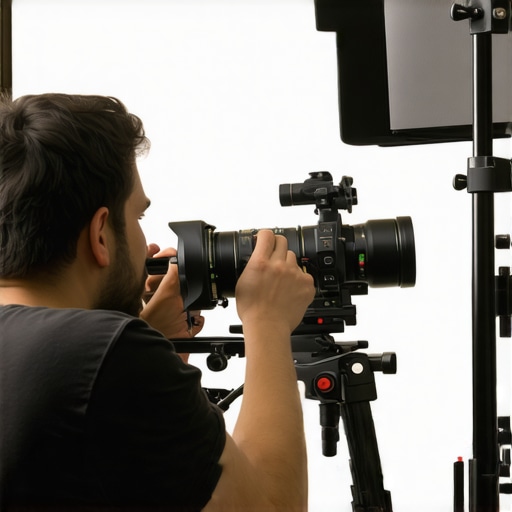
Throughout my career in filmmaking, I’ve learned that often, it’s the smallest details—those overlooked nuances—that make the most profound difference in achieving professional quality. One moment that stands out was when I discovered how critical proper support setup is for smooth camera movement. I used to neglect the importance of stable rigging, but a minor tweak with support tension and balance dramatically improved my shots. This taught me that investing time in understanding and maintaining foundational equipment unlocks consistent results and boosts confidence on set.
What I Wish I Knew About cine lenses, cinema projectors, film lighting, projection screens, and camera supports
- The Myth of Equipment Superiority: I used to believe that upgrading to the latest gear always meant better results. However, I realized that mastering how to optimize my existing tools often made more impact than constantly chasing new gadgets. Vintage cine lenses, when properly maintained, can offer character and depth that modern optics sometimes lack. Don’t underestimate the value of understanding your equipment thoroughly—it’s the real game-changer.
- Lighting is Less About Power and More About Control: I once overwhelmed a scene with high-output lights, thinking bright was better. I quickly learned that shaping and diffusing light to match mood creates far more authentic visuals. Proper use of modifiers and understanding color temperatures elevate storytelling, rather than just increasing intensity.
- Projection Screen Choice Matters More Than You Think: I used high-gain screens believing they would amplify brightness, but I experienced hotspots and poor viewing angles. Real cinematic quality depends on matching screen gain to room layout and ambient light, ensuring an even image. It’s a subtle adjustment that can transform a good projection into a stunning visual experience.
- Support Systems Are The Foundation Of Precision: I once ignored the stability of my camera supports during a critical shot. Vibration and unintended movements ruined the take. Now, I prioritize using quality stabilizers, properly tensioned rigs, and regular checks. A reliable support system is essential for bringing cinematic vision to life without distraction.
Tools That Make My Setup Work Smarter
- Support system tension meters: They help me fine-tune support equipment quickly, saving precious set time.
- Specialized cleaning kits: Essential for maintaining vintage lenses and preserving their character over years of use.
- Projector calibration tools: They ensure color accuracy and contrast, critical for delivering a captivating viewing experience.
- Prime lenses: I rely on primes for their superior optical qualities, especially in low-light conditions, avoiding compromises that zooms often introduce.
Embrace the Journey, Create with Confidence
There’s a unique satisfaction in knowing that the choices you make—no matter how small—set the foundation for compelling storytelling. Every filmmaker encounters challenges, but understanding the subtleties of cine lenses, projectors, lighting, and supports allows you to craft images that resonate deeply with audiences. It’s not just about equipment; it’s about your mastery over it and the passion you bring to each project. Keep experimenting, learning, and pushing your creative boundaries—your future work will thank you for it.
What’s one overlooked piece of gear or technique that dramatically improved your filmmaking? Share your insights below—I’d love to hear how those hidden lessons transformed your craft!
About the Author
James Duke
ThinkOTS
James Duke is a seasoned professional in the creative production industry, bringing a wealth of technical knowledge and hands-on experience to cinegearguide.com. As a key figure at ThinkOTS, James has spent years navigating the complexities of high-end production environments, where selecting the right equipment is the difference between a successful shoot and a logistical failure. His expertise spans the full spectrum of cinematography gear, from advanced camera systems to the intricate accessories that define modern filmmaking. On cinegearguide.com, James leverages his deep understanding of the industry to provide authoritative insights, gear reviews, and technical guides. He is known for his ability to break down complex specifications into practical, actionable advice for filmmakers of all levels. His perspective is rooted in the real-world application of technology, ensuring that every recommendation is backed by professional standards. James is dedicated to empowering the filmmaking community by sharing his expertise, helping others navigate the ever-evolving landscape of cinema technology with confidence and clarity.
LinkedIn Profile