
Ever been on a shoot when your focus wheel suddenly feels looser than a door hinge? One minute you’re smoothly pulling focus, and the next, the entire mechanism wiggles, throwing off your shot at the worst moment. I remember a time early in my filming days when I was so engrossed in getting that perfect shallow depth of field, only to realize after a few takes that my follow focus was practically a jungle gym. That lightbulb moment hit me hard—why was my focus slipping, and how could I fix it before my next shot?
Getting a Grip on Focus Play: Why It Matters More Than You Think
Follow focus play isn’t just a minor annoyance; it’s a real threat to your shot precision. When those tiny-backlash moments happen, you risk losing critical focus, which can ruin an entire scene or require costly reshoots. Plus, it chips away at your confidence, especially when you’re working on tight deadlines or client projects. The good news? This problem is often simple to fix if you understand what’s going on behind the scenes.
Is Your Focus System Actually Worth It? Common Fears and Myths
At first, I was skeptical—thinking, “Is this really fixable, or do I need to replace my entire setup?” I also worried that tightening a few screws would damage my gear or void the warranty. Let me tell you, I made those same mistakes early on, like over-tightening or ignoring manufacturer instructions. Trust me, a few small adjustments can make a world of difference without causing harm. If you’ve faced similar doubts or fears, you’re not alone—many filmmakers underestimate the importance of a well-maintained follow focus. For further tips on maintaining your gear, check out this guide on cine lenses.
End of this intro sets the stage for hands-on steps to eliminate play and get back to pristine focus control. Ready to see how simple tweaks can bring your focus accuracy back? Let’s dive into the details!,
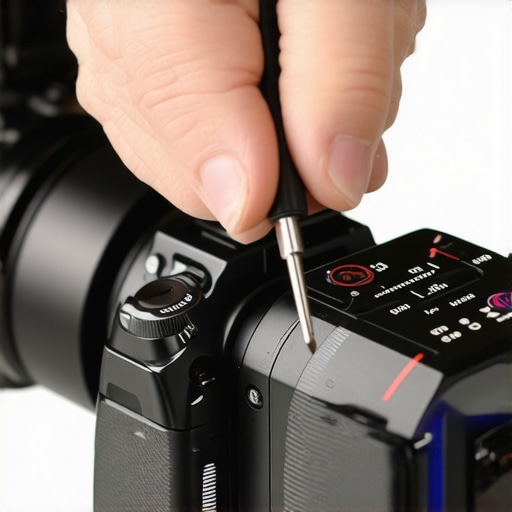
Secure Your Focus Mechanism Tighten the Focus Wheel and Gears by snugly turning any loose screws using the appropriate tool. I once found my follow focus slipping mid-shoot because a tiny screw was loose, causing inconsistent focus. After tightening it properly, my footage became sharper, and I avoided re-shoots. Ensure all moving parts are snug but not over-tightened to prevent damage.
Check and Replace Worn Parts Inspect your focus gears, cams, and drive belts for wear or damage. Worn teeth or slipping belts are common culprits, especially after extensive use. I replaced a worn gear with a new one, which instantly improved focus accuracy. Keep spare parts handy and replace visibly damaged components promptly to maintain precision.
Adjust and Calibrate Follow focus alignment so that rotation corresponds accurately to focus marks. Use calibration charts or repeatable focus test shots with a marked target. In my setup, I calibrated the focus wheel by aligning the marks precisely, which eliminated any backlash. Regular calibration ensures consistent focus control, especially after maintaining or replacing parts.
Lubricate Moving Parts Use appropriate lubricant on focus gears and drive mechanisms to reduce friction and prevent sticking. During a shoot, I applied a light silicone spray to my gear assembly, which smoothed movements and reduced play. Avoid over-lubricating, and use recommended lubricants to prevent dust accumulation and gear slippage.
Use Proper Mounting Techniques Ensure your follow focus and lens support are securely mounted to prevent vibrations. I once experienced focus shifts when my rig wasn’t firmly attached to the tripod. Tighten all mounting screws and verify stability before shooting. Secure mounts prevent unwanted play and ensure focus adjustments are precise.
Test and Fine-Tune Regularly conduct test shots to identify any play or backlash. I set up a simple focus chart and rotated the focus wheel slowly to observe any slack. Fine-tuning the tension of gears and adjusting the backlash settings on the follow focus can significantly improve control. Consistent testing helps catch issues early and maintains your setup’s reliability.
 When it comes to filmmaking gear like film lighting, cine lenses, camera supports, and cinema projectors, many professionals fall prey to misconceptions that impact the final quality of their work. The common myth that brighter lights always produce better images ignores the nuanced interplay of light quality, color temperature, and shadows—factors that truly elevate a scene. In reality, over-reliance on intensity can lead to flat visuals lacking depth, as expert cinematographers know that controlling highlight roll-off and diffusions matters more than sheer brightness. Similarly, with cine lenses, a widespread belief persists that the most expensive glass guarantees the best sharpness. However, many high-end lenses introduce subtle coloring or contrast choices that may not suit your project’s mood, highlighting the importance of lens character over price—more about this in choosing the right cine lens. On camera supports, the trap is assuming that heavy-duty rigs always provide stable images. Yet, improper balance and mounting can induce micro-vibrations, so understanding weight distribution and support setup is crucial to prevent jittery footage. When it comes to cinema projectors and projection screens, some overlook the importance of matching screen gain and projector lumen output. A high-lumen projector paired with the wrong screen surface can result in washed-out images during daytime or ambient-lit scenes—see best projection screens in 2025 for guidance. An often hidden nuance is that many overlook the influence of environmental factors—like room acoustics impacting sound clarity—that are just as vital as the visuals. For example, an optically perfect projector can be rendered ineffective if the room’s reflective surfaces cause glare or ghosting. This underscores the need for integrated planning: matching gear choices with environmental considerations rather than chasing perfect specs in isolation. One advanced mistake is neglecting sensor calibration or lens maintenance, which can subtly degrade image quality over time. Studies show that minute dust particles on lenses or misaligned sensors cause significant loss in sharpness and color fidelity—so routine cleaning and calibration are investments in your image quality (see calibration tips). Make sure your workflows include regular checks, and do not assume that expensive gear will automatically stay optimized. Have you ever fallen into this trap? Let me know in the comments. Mastering these nuanced details can be the difference between good and outstanding footage, elevating your craft beyond common pitfalls.
Maintaining your filmmaking and projection gear isn’t just about preventing breakdowns; it’s about ensuring consistent quality and maximizing your investment. From cine lenses to cinema projectors, each component demands specific care to perform optimally over time. One of the most overlooked aspects is establishing a routine with reliable tools that streamline maintenance and calibration processes.
Invest in Precision Cleaning and Calibration Kits
For lenses, I personally rely on a high-quality blower and microfiber cloths—like the Peterson Dust-Off and Zeiss Lens Cleaning Kit—to eliminate dust and smudges without scratching coatings. Calibration tools such as the DataColor SpyderX or X-Rite i1DisplayPro are indispensable for maintaining accurate color profiles on monitors—crucial when grading and ensuring your projected colors match your creative intent. Regularly calibrate your projector using specialized tools like the Murideo SIX-G tester to keep brightness and color consistency across sessions. Regular calibration isn’t just a one-time task; it requires periodic checks, especially after replacing lamps or cleaning filters.
Protect and Lubricate Critical Components
Gears, focus mechanisms, and moving parts need appropriate lubrication to prevent wear. I recommend using nano-technology lubricants like Nye Lubricants’ NanoLIN series, which reduce friction without attracting dust—a key factor in maintaining cine lens smoothness and projector longevity. Be cautious to apply lubricants sparingly, focusing only on essential contact points. Using the right lubricant can extend the lifespan of your equipment, much like how proper oiling reduces wear in high-precision camera supports. Also, regularly inspect and tighten support mounts, tripod heads, and rigging points to prevent micro-shifts that degrade image stability.
Implement Effective Storage and Handling Habits
Proper storage is vital. Keep lenses in protective cases with desiccants to prevent fungus growth—a common threat to vintage cine glass. For cinema projectors, store lamps in cool, dry places, and regularly check for dust accumulation inside enclosures. When moving your gear, invest in high-quality padded cases and follow manufacturer instructions to avoid mechanical shocks or misalignments.
Schedule Routine Check-Ups for Long-Term Performance
Consider creating a maintenance calendar that covers cleaning, calibration, and part replacements. Such discipline ensures your gear remains in peak condition and reduces costly downtime. For complex machinery like cinema projectors, engaging a specialized technician annually is advisable; they can perform detailed calibration and preventive maintenance, much like how digital cinema facilities have dedicated service programs in place.
How do I maintain film lighting and projection equipment over time?
Recent advancements now allow for software-based monitoring of performance metrics. For example, some cinema projector models integrate internal software that detects lamp stability and color fidelity, prompting maintenance before issues become noticeable. Implementing backup solutions like UPS power supplies and surge protectors also safeguards against electrical fluctuations, prolonging your equipment’s life and ensuring consistent output. As projection technology evolves, so will maintenance protocols—expect future trends to focus more on predictive diagnostics integrated into your gear’s firmware.
Don’t forget: using the right tools and following disciplined routines are your best allies in maintaining top-tier quality. Try setting up a dedicated maintenance kit and schedule—your future self will thank you! For the most comprehensive guide on maintaining high-performance cinema projectors, visit this detailed guide.
Lessons Films Never Taught Me About Focus and Equipment Care
- One of my toughest realizations was that even the slightest gear play can sabotage an entire scene’s perfection. That moment when my focus was off during an emotional cut taught me to always double-check backlash settings before every shoot.
- I learned that regular calibration isn’t just a technical chore—it saves countless reshoots and maintains my confidence in the shot’s sharpness, especially after swapping lenses or adjusting gear setups.
- Trusting quality lubricants and proper tightening practices extended the lifespan of my gear, proving that small preventive measures are smarter than costly repairs down the line.
- Handling and storage weren’t given the attention they deserved until a dusty lens or a misaligned projector caused unexpected blurriness—fast-forward to creating dedicated maintenance routines that keep my kit in top shape.
My Arsenal for Cinematic Precision and Durability
- Peterson Dust-Off and Zeiss Lens Cleaning Kit: I swear by these for keeping my lenses pristine without damage. Regular cleaning preserves clarity and focus consistency.
- Nye Lubricants’ NanoLIN Series: These lubricants drastically reduce wear and friction, vital for smooth focus wheels and support rigs, especially on long shoots.
- DataColor SpyderX: Accurate color calibration is non-negotiable; this tool ensures my monitors and projectors display true hues, aligning my digital workflow with physical output.
- Murideo SIX-G tester
: For projector calibration, this device helps me maintain perfect brightness and color fidelity, crucial when projecting in ambient-lit environments.
Push Your Limits and Keep Innovating
Every filmmaker and technician can relate to the thrill of mastering gear and focus control, transforming challenges into art. Embrace proactive maintenance routines, invest in trusted tools, and always stay curious about new techniques—your gear and your craft will thank you. Remember, the pursuit of excellence is ongoing; the more you learn and adapt, the more your work will stand out. What’s the one gear maintenance habit you’ve found most effective? Share your experience below and let’s elevate each other’s craft!
About the Author
James Duke
ThinkOTS
James Duke is a seasoned professional in the creative production industry, bringing a wealth of technical knowledge and hands-on experience to cinegearguide.com. As a key figure at ThinkOTS, James has spent years navigating the complexities of high-end production environments, where selecting the right equipment is the difference between a successful shoot and a logistical failure. His expertise spans the full spectrum of cinematography gear, from advanced camera systems to the intricate accessories that define modern filmmaking. On cinegearguide.com, James leverages his deep understanding of the industry to provide authoritative insights, gear reviews, and technical guides. He is known for his ability to break down complex specifications into practical, actionable advice for filmmakers of all levels. His perspective is rooted in the real-world application of technology, ensuring that every recommendation is backed by professional standards. James is dedicated to empowering the filmmaking community by sharing his expertise, helping others navigate the ever-evolving landscape of cinema technology with confidence and clarity.
LinkedIn Profile